
Peachtree City Criminal Court Records Search
Criminal court records in Peachtree City are handled at two levels. The Peachtree City Municipal Court takes care of traffic cases, city ordinance violations, and misdemeanor offenses that occur within city limits. Felony charges and more serious criminal matters go through the Fayette County Superior Court in Fayetteville. Peachtree City is part of the Griffin Judicial Circuit. The city is well known for its golf cart paths, but the court system stays active with a range of cases each year. Public access to court records is guaranteed under Georgia's Open Records Act, though certain records may be restricted by court order.
Peachtree City Criminal Records Quick Facts
Peachtree City Municipal Court
The Peachtree City Municipal Court hears cases involving traffic tickets, city code violations, and state misdemeanors committed inside city limits. The court sits at 350 Highway 74 North, Peachtree City, GA 30269. Call (770) 487-7657 to reach the court clerk.
The clerk can pull up case files by name or case number. Walk in during business hours with a valid photo ID and the clerk will search for your case. You can get copies of disposition letters, payment records, and case status updates. The court runs on a set schedule, so it helps to call first and make sure the clerk window is open when you plan to visit. Staff are used to handling records requests and can walk you through the steps if it is your first time.
| Municipal Court |
350 Highway 74 North Peachtree City, GA 30269 Phone: (770) 487-7657 |
|---|---|
| Hours | Monday - Friday, 8:00 AM - 5:00 PM |
| Case Types | Traffic violations, city ordinance violations, misdemeanors |
| Copy Fee | $0.10 per page |
Note: Golf cart violations are a common case type in Peachtree City given the city's extensive path system and local golf cart ordinances.
Fayette County Criminal Records
Felony criminal cases from Peachtree City are filed in the Fayette County Superior Court. The Griffin Judicial Circuit handles these cases. The courthouse is in Fayetteville, the county seat. Drug offenses, assault, burglary, and other serious charges all go through the county system. The Fayette County Clerk of Superior Court keeps the criminal case files on record.
Fayette County is a smaller county compared to its neighbors, but the court system still processes a steady number of criminal cases. The clerk's office can help you look up records in person. You can also try the county's online case search system if one is available. Call the clerk's office in Fayetteville if you are unsure how to access their records.
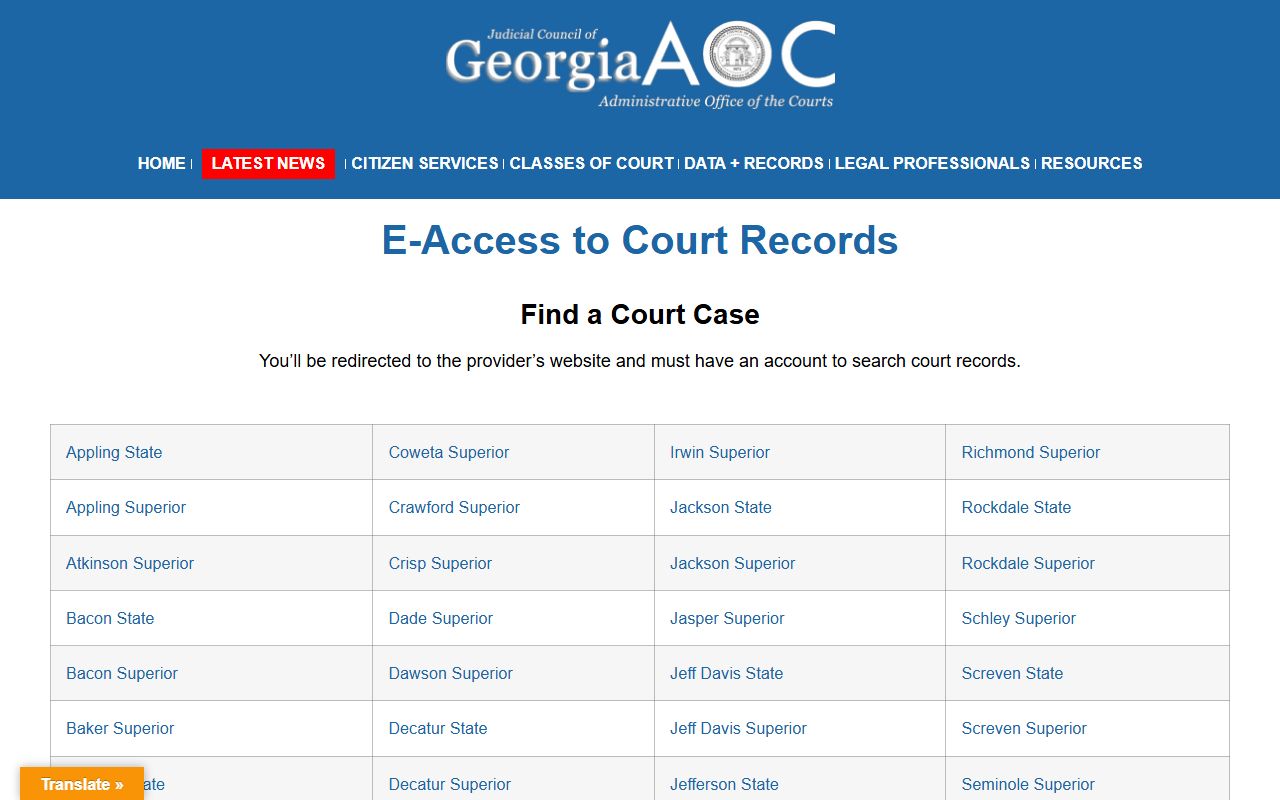
The E-Access to Court Records portal pulls case data from courts statewide, including Fayette County. Set up a free account and search by name. You can filter by county to narrow your results. This is a good starting point if you are not sure which court has the file you need.
Searching Peachtree City Records
You have several options for finding criminal records tied to Peachtree City. The method you pick depends on what you need and how fast you need it.
The GSCCCA is the central index for Georgia court filings. It covers all 159 counties. Search for Fayette County records through this tool to find felony case files connected to Peachtree City. A basic account costs $14.95 per month. Premium runs $29.95 per month with extra search features. The GSCCCA also runs FANS, a free alert tool. Set up a name alert and FANS will notify you when a new court filing shows up in Fayette County or any other county you choose.
For your own record, you can request a Purpose Code U report from the GBI. This report pulls from the Georgia Crime Information Center database and lists your arrest history, charges, and case results from across the state. You need your name, date of birth, and fingerprints to get it done. Call the GBI at (404) 244-2639 for more info on the process.
In person, head to the municipal court on Highway 74 or the Fayette County Courthouse in Fayetteville. Bring the full name and date of birth of the person you are searching for. A case number makes things go quicker. Under O.C.G.A. § 50-18-71, copies cost $0.10 per page. The first 15 minutes of clerk search time are free at any Georgia public office.
Record Restrictions in Peachtree City
Georgia law allows certain criminal records to be restricted from public access. This process replaced what used to be called expungement. Under O.C.G.A. § 35-3-37, records may be restricted for arrests with no conviction, certain misdemeanor convictions after four years, and dead docket cases older than 12 months. The limit is two misdemeanor restrictions per person.
For Peachtree City arrests, you would file the petition through the Fayette County court system. The Fayette County District Attorney's office handles these requests. Processing fees can run up to $50. Once a judge approves the restriction, the records are removed from public view and will not appear in most search results.
Under O.C.G.A. § 50-18-70, restricted records are exempt from open records requests. Trafficking victims may qualify for free record restriction under the Survivors First Act. Speak with a local attorney or contact the GBI if this situation applies to you.
State Criminal Record Resources
The GBI manages Georgia's statewide criminal history database. Their Criminal History Records Helpline is (404) 244-2639 option 3. Staff there can answer questions about your record and explain how to correct errors. The GBI Open Records Unit accepts requests only through their online portal.
If a criminal case from the Griffin Judicial Circuit was appealed, you can search the Georgia Supreme Court and Court of Appeals docket systems. Both are free to use online. Search by case name or docket number to find appellate records tied to Fayette County and Peachtree City cases.
Nearby Cities
These cities near Peachtree City have their own criminal court records systems. Municipal courts handle local offenses, while felony cases go through the county where the crime occurred.